
Backyards Designed for Actual Use
Gazebo & Pergola Construction in Houston for properties ready to expand functional space beyond interior walls
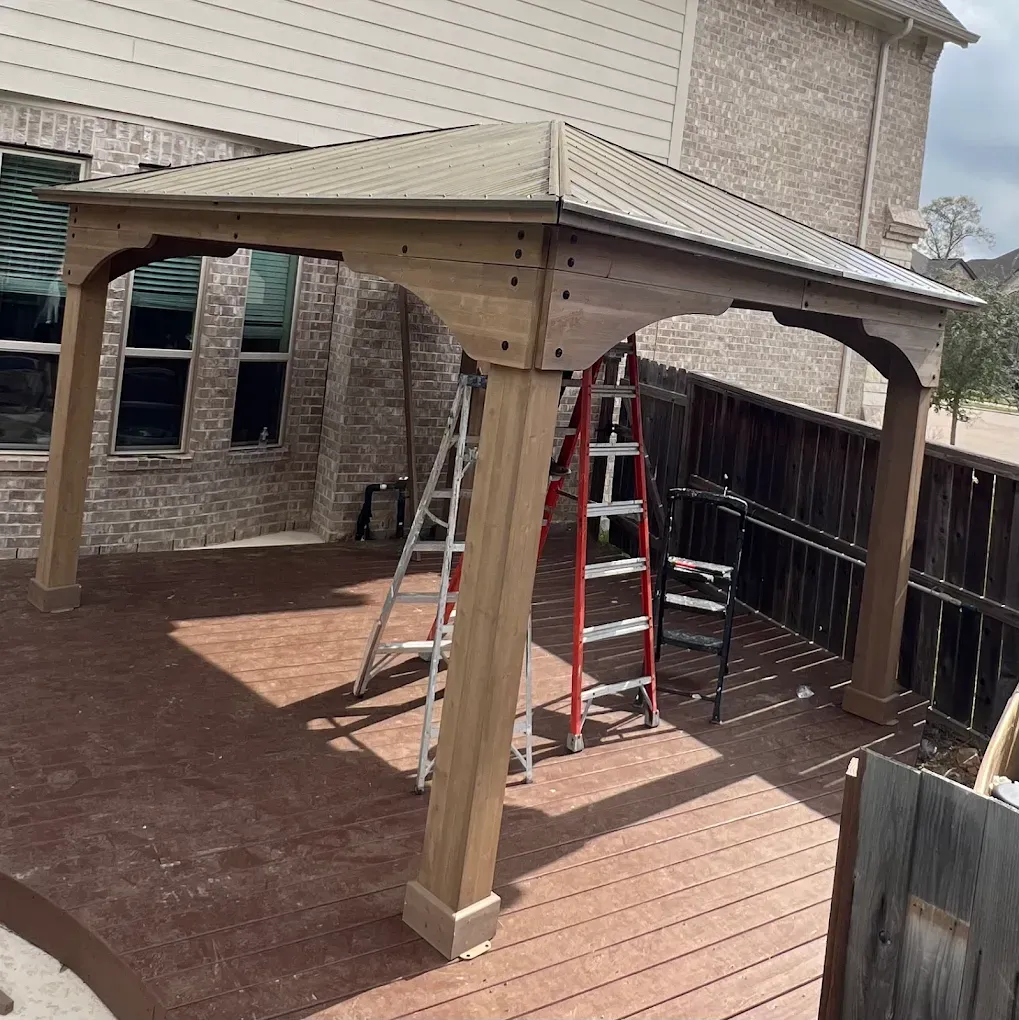
Most backyards sit unused because they lack defined areas for seating, shade, or activities that make spending time outdoors comfortable and practical. Outdoor living construction creates intentional spaces—pergolas that provide filtered sunlight, seating areas with stable surfaces, decks that extend living space outward, and gathering zones designed around how you actually use your property. Dane Construction & Remodeling builds custom outdoor improvements across Houston that increase backyard functionality, property value, and year-round comfort through personalized layouts and durable material selection.
The planning process identifies how you want to use outdoor space—entertaining groups, grilling and dining, creating shaded relaxation areas, or adding property value through visual improvements. Designs account for sun exposure patterns throughout the day, drainage paths that affect where structures can sit, and connections to existing doors, patios, or landscaping features. Material selection focuses on performance in exterior exposure, including wood species that resist rot and insect damage, composite materials that handle moisture without warping, and finishes that protect against UV degradation.
Arrange an gazebo or pergola construction consultation to discuss layout possibilities and review material options suited to your property conditions.
The Difference Between Planning and Building Outdoor Spaces with Gazebos and Pergolas
Construction starts with site preparation that addresses drainage, levels surfaces where structures will sit, and positions features to complement existing yard conditions. Pergola posts get set in concrete footings that prevent shifting, and beam spans get calculated based on planned shade coverage and local wind loads. Seating areas require stable bases—either integrated into deck framing or built on compacted gravel and paver foundations that won't settle unevenly. Each element connects logically to the next, creating flow between cooking areas, dining zones, and relaxation spaces.
Once construction finishes, you'll notice your backyard has defined zones for different activities instead of undefined lawn space. Pergolas provide shade during peak sun hours without blocking airflow, and seating areas remain level and dry even after rain. Decks connect smoothly to doorways, and stairs descend at comfortable angles. The overall layout guides movement naturally between different outdoor areas without awkward transitions or unused gaps.
Projects may combine multiple elements—a covered patio with ceiling fans, a deck with integrated seating and pergola coverage, or a freestanding pavilion positioned to catch breezes while blocking western sun. Construction management coordinates sequencing so foundational work completes before finish details, and site cleanup happens progressively rather than leaving debris until the end.
What Property Owners Usually Ask
Outdoor construction questions typically focus on design flexibility, material longevity, and how improvements perform in Houston's climate conditions.
What's the difference between pergolas and covered patios?
Pergolas feature open-slat roofs that provide partial shade and allow air circulation while supporting climbing plants or retractable shade fabric. Covered patios use solid roofing materials that block rain and direct sun completely, often extending existing rooflines to create protected outdoor rooms.
How do outdoor living spaces increase property value?
Functional outdoor improvements expand usable square footage and create visual appeal that attracts buyers looking for move-in-ready homes with established entertainment areas. Well-designed outdoor spaces photograph well and differentiate properties in competitive markets.
Why do some outdoor structures develop stability problems over time?
Shallow footings, inadequate post sizing for span distances, or lack of diagonal bracing cause structural movement. Proper construction includes below-grade footings, posts sized for load requirements, and cross-bracing that prevents racking in wind.
When should outdoor construction happen relative to other home improvements?
Outdoor work typically follows major landscaping changes but precedes final plantings, allowing heavy equipment access without damaging finished yard features. Coordination with fence installation and patio work prevents redundant site disruption.
What does the construction process involve from concept to completion?
Projects start with site evaluation and design planning, proceed through permit coordination if required, continue with foundation and structural work, and finish with detail installation, staining or sealing, and comprehensive site cleanup.
Dane Construction & Remodeling customizes outdoor living designs to fit your property's specific conditions, sun exposure, and intended uses. Request a consultation to explore design options and receive a detailed project plan based on your backyard's layout and your outdoor living goals.